
Benbrook Previous Residents by Era
One Benbrook address is a chain of dated records, not a single lookup. Start with the source closest to the period in question, then move backward only after recording the legal description and the name role shown in the last document. Tarrant County's online property and deed tools are useful for the current trail, but the older trail moves to library microfilm, Tarrant Archives holdings, and federal schedules. The table separates the kinds of evidence instead of treating owner and occupant as the same thing.
| Source | Years It Covers | Where Held | What It Shows |
|---|---|---|---|
| Tarrant Appraisal District property card | Current assessment data | TAD web property search | Current owner, mailing and situs addresses, legal description, and instrument reference |
| County Official Records Search | Current index; exact web cutoff unstated | Tarrant County Clerk portal | Grantor or grantee search, dates, document types, subdivision, and OCR scope |
| Grantor-grantee index | 1876-1920 | Fort Worth Library and Tarrant Archives microfilm or index | Earlier deed-chain parties and instruments |
| Historic land and property ledgers | Land 1897-1908; property 1876-1917 | Tarrant Archives PDFs | Historic entries, partly searchable except handwriting |
| Tarrant tax rolls | 1850-1981 | Fort Worth Library microfilm | Taxpayer, property, land, and poll-tax clues |
| Fort Worth Suburban directories | 1963-1993, irregular listed years | TSLAC and related collections | Historical address and household listing clues |
| Federal census | Public through 1950 | NARA and library databases | Household snapshot, age, relationship, birthplace, and enumeration context |
| Benbrook permits and archive reports | Retention varies; exact start not located | City online services, archive, or PIA request | Construction, inspection, or project dates where releasable |
For recent previous residents, work from TAD to the deed index. For a pre-digital title trail, the documented 1876-1920 grantor-grantee index, deed books, microfilm, and staff assistance are the fallback. For a household rather than an owner, use the directory and census pair closest to the deed date.
Note: A property owner, a mailing address, and a listed resident can be different people, so every result needs its source date and role.
Freezing a Benbrook Parcel
Before tracing previous residents, freeze the present parcel identity. The Tarrant Appraisal District property search can return an account number, georeference, situs address, current owner, primary owner mailing address, legal description, subdivision, neighborhood code, and instrument reference. Save the search date as well. A situs address is the physical parcel; the primary owner address is where notices are mailed. Neither field proves that a person was living there at every point in time.
Next, use the Tarrant CAID map to check the parcel, tax account or georeference, city label, and surrounding plat context. CAID is informational rather than a survey. Its city, ZIP, property, flood, school, and precinct layers can help resolve a different Fort Worth or Benbrook label, but the legal description and recorded plat are the stronger bridge when an old deed lacks a modern street number.
Benbrook's final-plat process creates lots, easements, streets, and rights-of-way before the signed plat is recorded in Tarrant County. Capture subdivision, lot, and block when they are present. Those identifiers help connect an old conveyance to a current address without assuming that a boundary label or postal city name stayed unchanged.
Benbrook Previous Residents Deed Chain
The deed chain is the owner trail through a past address. Search the Tarrant County Official Records Search for the current owner as grantee, an instrument number, a legal description, or an approximate recorded date. Read the seller, or grantor, from that purchase deed. Then search that seller as a grantee around the earlier acquisition date. Repeating that switch traces a chain backward from owner to seller to the seller's earlier purchase. A trustee, estate, corporation, or multiple spouses may require several name variants.
- Record the TAD account, georeference, current owner, situs, mailing address, legal description, subdivision, lot or block, and instrument reference.
- Locate the latest conveyance using the current owner as grantee, then compare document number, date, and legal description.
- Read the grantor or seller from that deed and search the seller as a prior grantee near the earlier transfer date.
- Repeat the role change for each earlier owner, keeping a dated chain rather than merging similar names.
- When the web record fails, move to the documented 1876-1920 index, deed books, microfilm, Central Library assistance, or Tarrant Archives.
- Grantor and grantee
- The grantor transfers an interest in the document; the grantee receives it. A person can appear in both roles at different times.
- Chain of title
- The sequence of recorded transfers that links one owner to an earlier owner for the same legal parcel.
- Legal description
- The lot, block, subdivision, or metes-and-bounds description used to identify land when an old deed does not show a modern street address.
The official deed-index interface is the source for this deed-search screenshot.
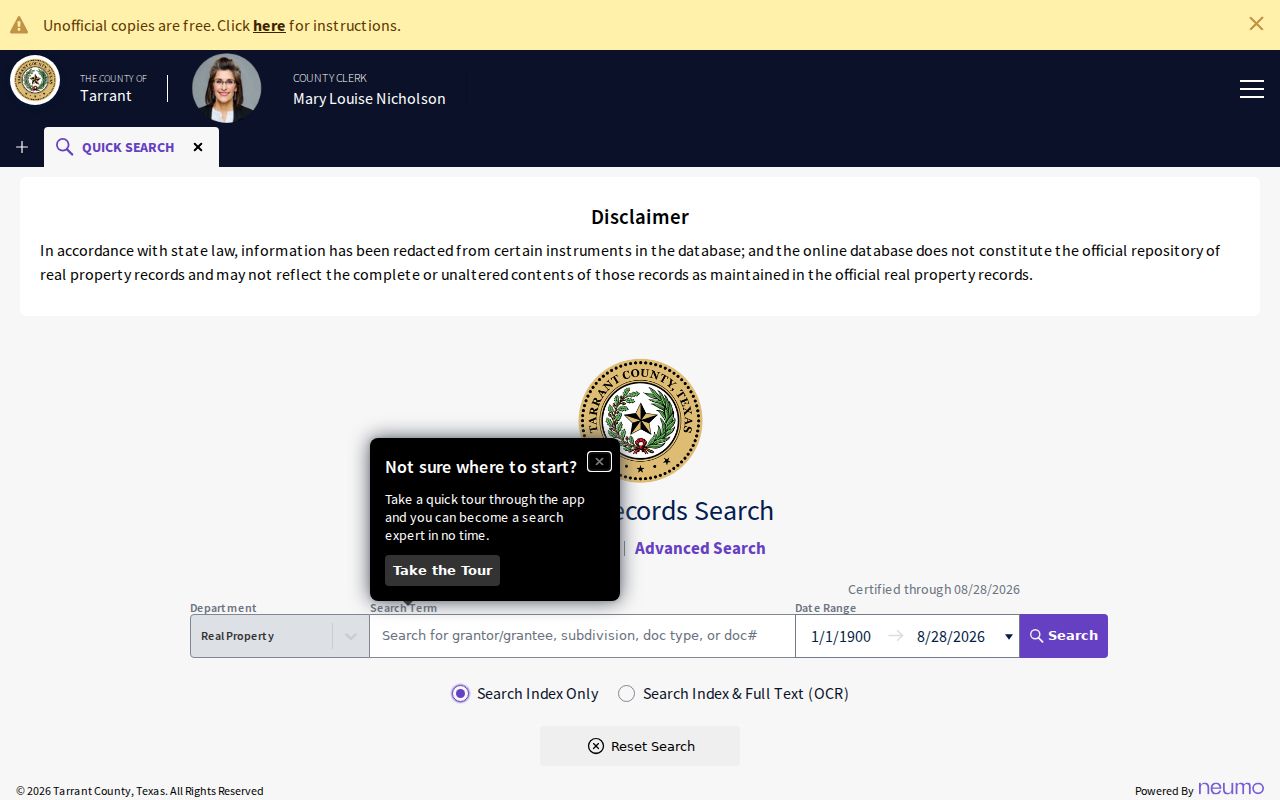
The Quick and Advanced controls, date range, and index or OCR scope provide ways to narrow a noisy Benbrook deed search before requesting a copy.
Benbrook Online Deed Limits
The deed portal shows a current certification-through date, but Tarrant County does not state an historical starting year for the web index. Do not turn a blank web result into a claim that an address had no earlier owner. The County Clerk Online Services notice says historic images are still converted, and directs a missing-document searcher to Central Library at 817-884-1069. For older materials, the library and Archives document the 1876-1920 grantor-grantee index, while the Archives has land ledgers for 1897-1908 and property ledgers for 1876-1917.
| Search term | Grantor, grantee, subdivision, document type, or document number. In Index Only mode, two or more words are searched individually. |
|---|---|
| Recorded date | From and To fields, plus preset recent-date choices. |
| Search scope | Index Only or Index and Full Text (OCR) when a phrase search can include document contents. |
| Controls | Quick Search, Advanced Search, Search, Reset Search, Register, Sign In, and Cart. |
| Copy follow-up | Request the official image or certified copy when an index result identifies a document but no image is available. |
The March 29, 1876 courthouse fire adds a second local limit. Most early records were lost, though some probate material survived and later transcriptions or certified copies may exist. A pre-fire gap can reflect the event or the record's custodian, not an empty history.
Note: The exact online cutoff is not documented in the official county source, so use the counter, library, and Archives routes for older gaps.
Benbrook Historic Tax Rolls
Tarrant tax-roll microfilm is a strong number-based bridge between an early deed and a later directory. Fort Worth Public Library documents Tarrant County rolls from 1850 through 1981. They are not a ready-made address list, but can show a taxpayer, land or personal-property clue, value, and poll-tax information. The tax roll must be read beside the legal description, deed chain, and nearby dates because a taxpayer is not automatically the person living at the property.
The Fort Worth Library tax-list collection explains the microfilm route. The regional History Center adds more than 40,000 volumes, 9,500 microfilm rolls, and 180,000 microfiche, along with maps, newspapers, yearbooks, and genealogy assistance. These collections make it possible to test a name or lot across record types when a Benbrook address is not yet visible in a directory.
The Fort Worth genealogy collection is the source for this research image.
Microfilm, directories, and census resources work as dated cross-checks, not as a replacement for the recorded parcel trail.
The Fort Worth History Center access page is the source for this companion image.
Contact the History Center at 817-392-7740 or history@fortworthtexas.gov before travel, since offsite archives require three business days for retrieval.
Benbrook Past Households in Directories
Directories supply the household layer that deeds cannot. TSLAC cross-lists Benbrook as Fort Worth Suburban for selected irregular years from 1963 through 1993. Start with the address in a reverse or criss-cross section when the volume has one, then note every listed occupant, spouse or household notation, telephone, occupation, and any owner-or-renter mark that the edition itself defines. Check the previous and following year because a publication date may lag a move.
Pair the closest directory year with a released federal census schedule. Census schedules are public through 1950 under the 72-year rule and supply a household snapshot, but not a continuous address log. The Benbrook city directory collections provide the catalog and shelf details, while this backward trail uses each volume to test who lived at one address around a dated conveyance.
The TSLAC directory listing is the source for this directory image.
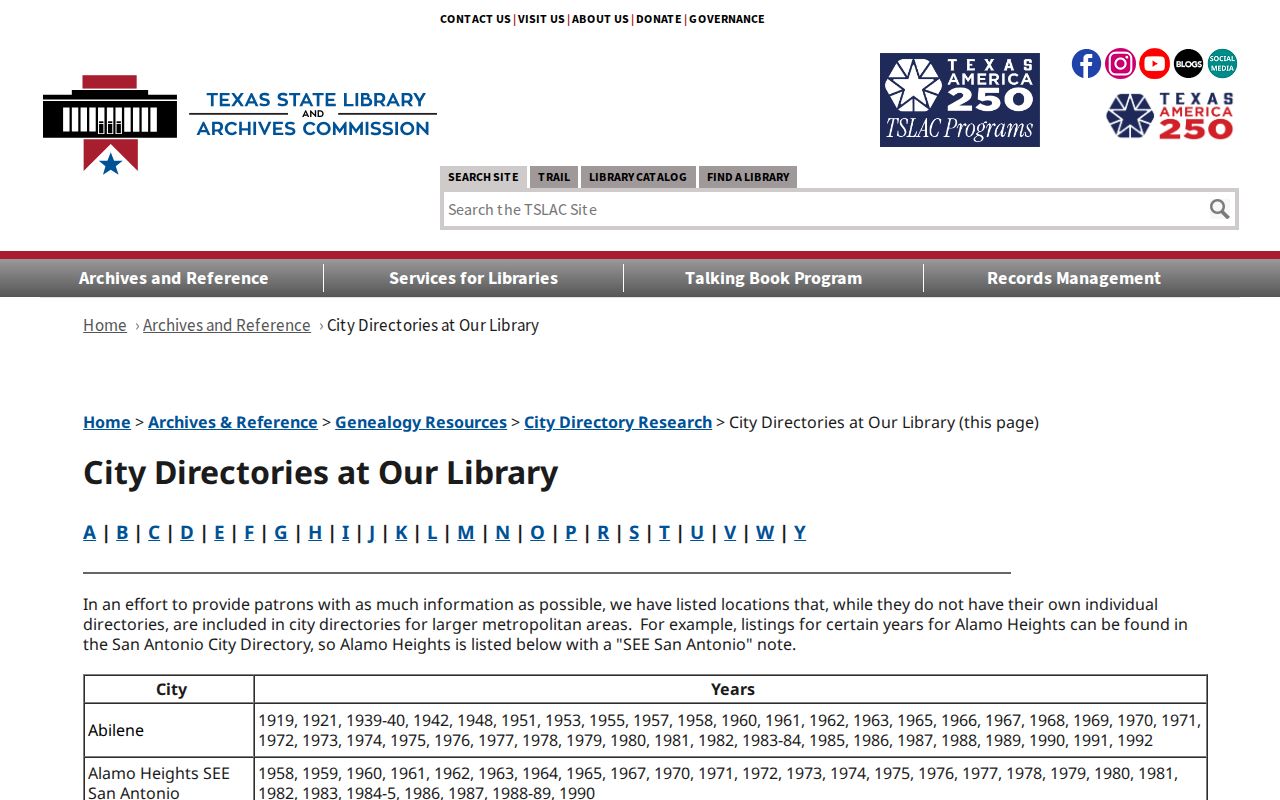
The Fort Worth Suburban cross-reference is the practical search term to retain alongside Benbrook when a directory search is incomplete.
Use this sequence: directory year and address, then census household, then deed or tax record, then obituary or probate if the person disappears from the local trail.
Benbrook House-History Map Check
Sanborn fire-insurance maps can date a structure or clarify a block because they may show buildings, construction materials, street names and widths, lot or block numbers, uses, hydrants, and boundaries. The Library of Congress search records can be narrowed by state, city, edition date, sheet count, notes, and digital-file links. That makes them useful verification tools when an address history has a building or street question.
No verified Benbrook Sanborn item was located in the official Library of Congress search during the research. Fort Worth coverage should not be assumed to cover a separate Benbrook address. Use City plats, permit files, aerials, and county property cards unless the Library of Congress or TSLAC identifies a local item. The Library of Congress Sanborn search guide is the source for this image.
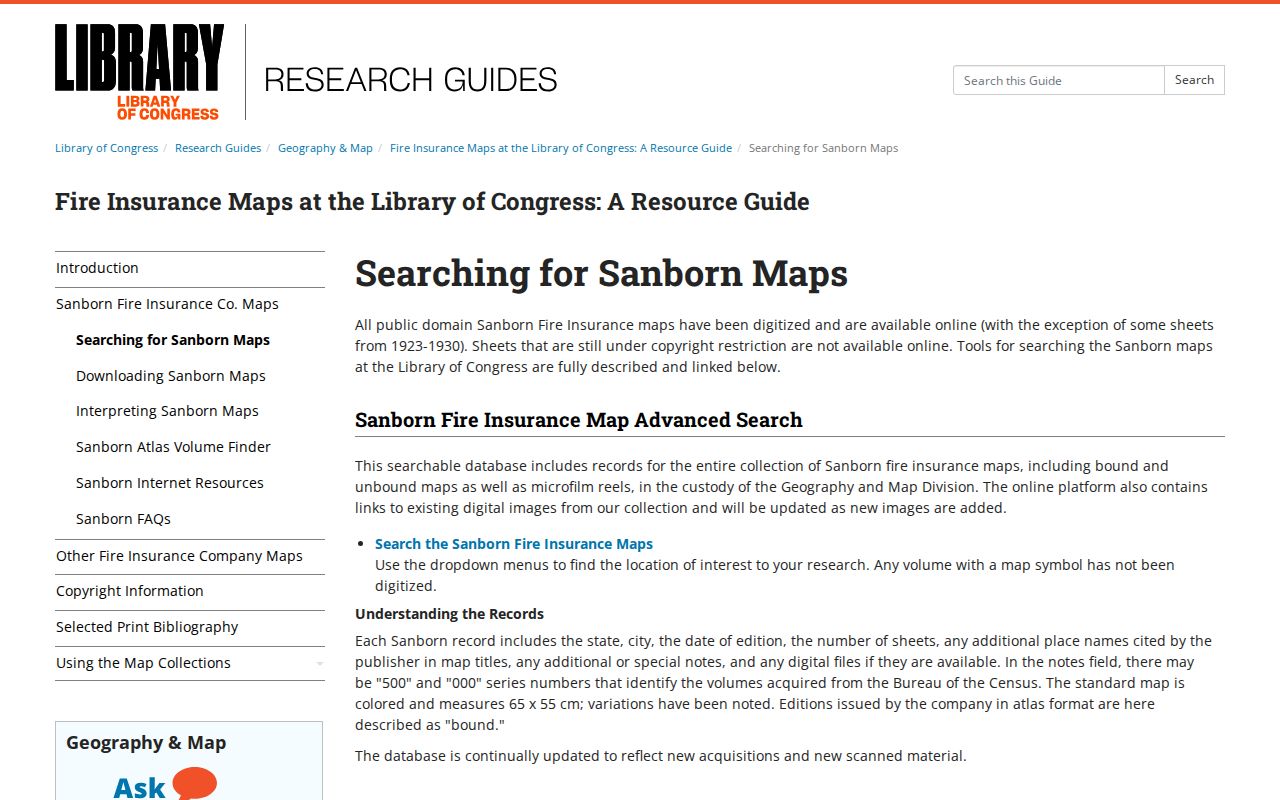
The search guide documents a verification route, not proof that a Benbrook map volume exists for a particular address or year.
Benbrook Household Record Endpoints
Obituaries and probate can close an address trail after a person leaves a directory. An obituary may provide a last residence, spouse, children, or relatives. A probate file may identify an executor, heirs, assets, and a later deed. Tarrant Archives has probate abstracts from 1866 through 1959, while the County Clerk and court routes hold the relevant official records. Treat these as endpoints to corroborate with the next conveyance, not as a promise of another person's current location.
Benbrook's local history is also searchable through the original Benbrook News issues donated to UNT's Portal to Texas History. Search a surname with a street, subdivision, church, school, Mary's Creek, or Benbrook Lake, then preserve the issue and page citation. The Portal to Texas History partner collection is the source for this image.
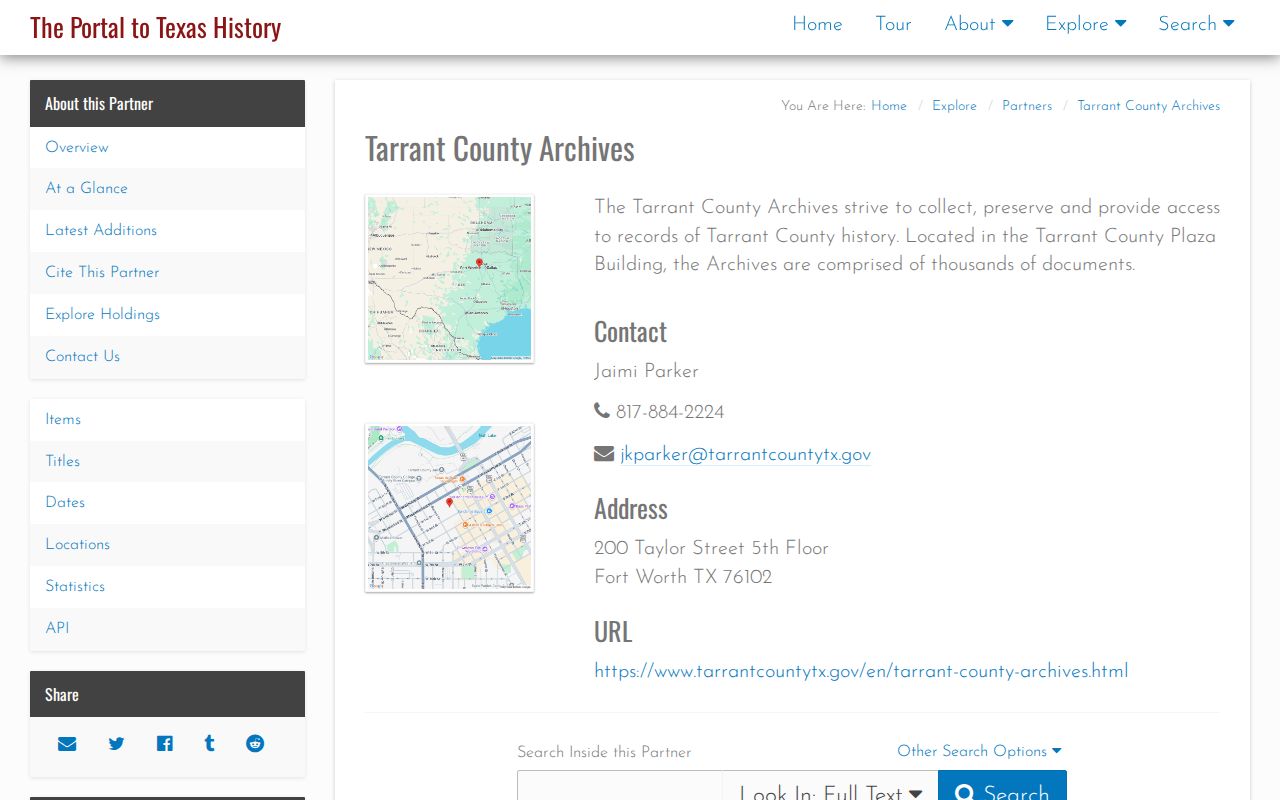
Newspaper and archival context can explain a directory gap, but the recorded deed, official probate file, or cemetery record remains the stronger confirmation route.
Lawful use. Benbrook previous residents research is suited to house history, family history, estate matters, and personal curiosity. Do not use records to harass, track, or expose a living person, and do not try to defeat protected-address programs.
Note: Keep personal details to the minimum needed to test a dated address record, especially where privacy protections may hide information by design.